
Mardonius (nephew of Darius I)
Persian commander in the Greco-Persian Wars, killed at Plataea.

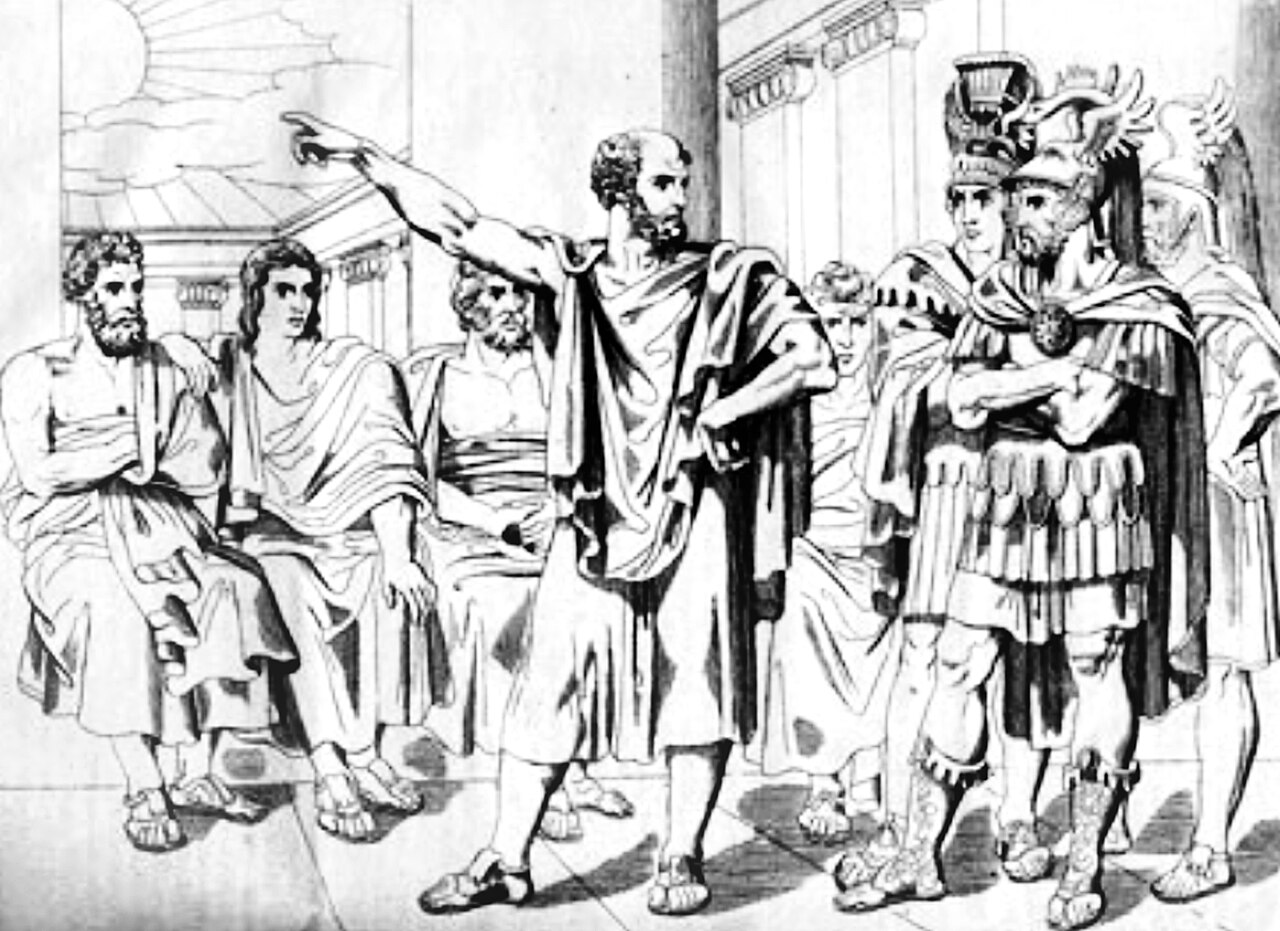
M. A. Barth · Public domain
Mardonius was a Persian military commander during the Greco-Persian Wars, known for his role in both the first and second Persian invasions of Greece. He was the son of Gobryas, a nobleman who helped Darius the Great claim the throne, and married Darius' daughter Artozostra, making him the king's son-in-law. Though he secured early victories, his career was marked by a catastrophic storm that destroyed his fleet, leading to his temporary dismissal, and he ultimately died at the Battle of Plataea.
- notable_relation
- Son-in-law of Darius I
Lore & Background
On his way, he deposed Greek tyrants in Ionian cities and replaced them with democratic governments—though ancient sources differ on whether this was a genuine reform or a strategic move. His fleet and army crossed the Hellespont, attacked Thasos (which became a tributary), and secured the diplomatic submission of Macedonia, which was formally established as a client kingdom. Though Mardonius was wounded in a subsequent night battle with the Brygi in Thrace, he subdued them, but the fleet loss forced a retreat to Asia Minor, and Darius relieved him of command.
Reader's Guide
Mardonius is significant as a key Persian commander whose actions shaped the course of the Greco-Persian Wars. His early success in expanding Persian control into Thrace and Macedonia was undone by a natural disaster, the storm at Mount Athos, which cost him his command under Darius. His later reinstatement under Xerxes I and his role in the destruction of Athens highlight his persistence, but his defeat and death at Plataea marked the end of the second Persian invasion and a turning point in Greek resistance. The account of his death, with the Spartan leader Pausanias rejecting the mutilation of his corpse as barbaric, underscores the cultural contrasts between Greeks and Persians. Mardonius' legacy is tied to both the ambitions and the limits of Achaemenid expansion into Europe.
Did You Know?
- Mardonius was the son of Gobryas, who assisted Darius when he claimed the throne.
- He married Darius' daughter Artozostra, making him Darius' son-in-law.
- He was killed at the Battle of Plataea by a Spartan named Aeimnestus.
Gallery
Frequently Asked Questions
Who is Mardonius (nephew of Darius I)?
Mardonius was a Persian military commander active during the Greco-Persian Wars. He was the son of Gobryas, a nobleman who helped Darius the Great secure the throne, and he became the king's son-in-law by marrying Darius's daughter Artozostra.
What was Mardonius's role in the Persian invasions of Greece?
He led Persian forces in both the first and second invasions, achieving early battlefield successes before a violent storm destroyed his fleet. That disaster cost him his command temporarily, but he was later brought back to lead the second campaign against Greece.
How does Mardonius's story end?
Mardonius was killed at the Battle of Plataea, where the Persian army suffered a decisive defeat against the allied Greek forces. His death represented one of the last major blows to Persian military ambitions on the Greek mainland.
Why is Mardonius important in ancient military history?
His career traces the arc of Persian power during the Greco-Persian Wars, from promising early victories to the catastrophic collapse at Plataea. As a close family member of Darius I, his successes and failures were directly tied to the king's broader strategic goals.
What was Mardonius's exact relationship to Darius I?
He was the king's son-in-law, having married Darius's daughter Artozostra. His father Gobryas had played a key role in helping Darius claim the Persian throne, which placed the family firmly within the royal inner circle.
More in Ancient & Medieval Military Leaders 25-33
Elsewhere in the Ancient & Medieval Military Leaders universe
Spotted an error? Know more?
This is a living reference — every entry is fact-audited, and reader corrections feed straight into our audit queue. Suggest an edit · See this site's audit record