
Maslama ibn Abd al-Malik
Umayyad prince and general who besieged Constantinople.

Maslama ibn Abd al-Malik was an Umayyad prince and one of the most prominent Arab generals of the early 8th century. He is best known for leading the last Arab siege of Constantinople and for extensive campaigns against the Byzantine Empire and the Khazar Khaganate.
- field
- Military command, provincial governance
- nationality
- Umayyad Caliphate
- known_for
- Leading the last Arab siege of Constantinople; campaigns against Byzantines and Khazars
Lore & Background
Maslama launched his military career leading annual summer raids against the Byzantines in Anatolia. Maslama was excluded from the line of succession because his mother was a slave concubine, but he secured the accession of his other brother, Hisham. Maslama was granted extensive estates by his brothers, investing considerable sums to reclaim and develop agricultural lands in Balis, the Balikh valley, and the marshlands of southern Iraq. The Abbasids' persecution of the Umayyad family was widespread and systematic, and there is no established evidence that Maslama's descendants were spared due to his battlefield reputation.
Reader's Guide
Maslama ibn Abd al-Malik's significance lies in his role as a leading military commander of the Umayyad Caliphate during its expansionist peak. His governorship of Iraq and the eastern provinces demonstrated the political power wielded by Umayyad princes, though his influence was curtailed by caliphal suspicion. His agricultural investments show a dimension beyond warfare, contributing to economic development. The survival of his descendants after the Abbasid revolution, due to his military reputation, highlights the lasting respect he commanded. His career illustrates the interplay of military command, dynastic politics, and frontier administration in the early Islamic empire.
Did You Know?
- Maslama was excluded from the line of succession because his mother was a slave concubine.
- The Abbasids' persecution of the Umayyad family was widespread and systematic, and there is no evidence that Maslama's descendants were spared due to his battlefield reputation.
Commander of the Northwestern Frontier
Maslama's rise to military prominence began in the early 700s when he co-led the annual summer raids (sawa'if) against Byzantine Anatolia alongside his nephew al-Abbas ibn al-Walid. His first major undertaking was the grueling 707–708 siege of Tyana in southeastern Asia Minor, a retaliatory expedition following the death of the celebrated general Maimun the Mardaite. The Arab force endured a harsh winter before defeating a Byzantine relief army in spring 708 and forcing the city's surrender. He followed this with victories near Amorium and a raid into Isauria in 709. That same year, Maslama was elevated to military governor of the Jazira, Armenia, and Adharbayjan, a posting he layered onto his existing authority over Qinnasrin in northern Syria. This combination placed the entire northwestern border of the Caliphate under his single command. From this strategic seat, he devastated Galatia, sacked Amaseia in 712, and captured Melitene in 714, cementing his reputation as the dynasty's foremost frontier commander.
The Last Arab Siege of Constantinople
In 715, Caliph Sulayman, too ill to command in person, entrusted his brother Maslama with the most ambitious military operation of the early Umayyad era: the conquest of Constantinople. The Arab force was enormous—chronicles cite 120,000 soldiers and 1,800 vessels. The vanguard crossed the Taurus Mountains in late 715, with Maslama and the main army and fleet arriving in spring 716. The Byzantine political landscape, fractured by recurring civil strife since 695, seemed to offer Maslama an opening. Emperor Anastasius II had been deposed by Theodosius III, and the Anatolic strategos Leo the Isaurian was plotting against him. Maslama attempted to exploit these divisions by opening negotiations with Leo, but the Byzantine general turned the talks to his own advantage, using the delay to consolidate his position. The siege ultimately collapsed into disaster for the Arab side. By 718, Sulayman's successor, Caliph Umar II, ordered Maslama to withdraw, bringing the last major Arab attempt to take the Byzantine capital to a close.
A Prince Outside the Line of Succession
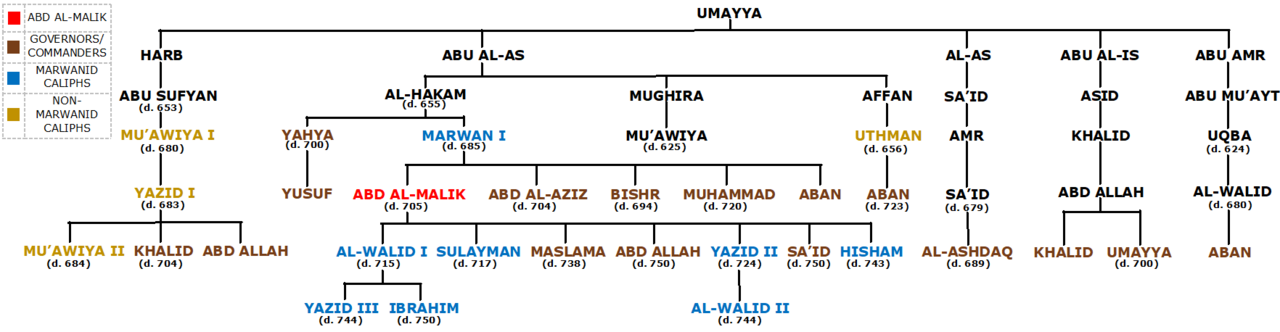
Despite being the son of Caliph Abd al-Malik and half-brother to four successive caliphs—al-Walid I, Sulayman, Yazid II, and Hisham—Maslama was permanently barred from the throne because his mother had been a slave concubine rather than a free noblewoman. This exclusion shaped his political trajectory in complex ways. Around 691, his father arranged his marriage to al-Rabab, daughter of the Qaysi tribal chief Zufar ibn al-Harith al-Kilabi, as part of a settlement ending Zufar's revolt, illustrating how Maslama's personal life served dynastic diplomacy. In 721, after successfully suppressing the revolt of Yazid ibn al-Muhallab in Iraq under Caliph Yazid II, Maslama was abruptly recalled; the caliph feared his brother's growing authority as governor of Iraq. Yet Maslama retained considerable influence: he played a key role in securing the accession of his brother Hisham in 724, under whom he resumed frontier campaigns. His cousin and eventual caliph Marwan II replaced him in command by 732, marking the end of his active military career.
Estates, Inheritance, and Posthumous Respect
Beyond the battlefield, Maslama built a substantial agricultural empire. His caliph-brothers granted him extensive estates, and he invested heavily in reclaiming and developing farmland in Balis, the Balikh valley, and the marshlands of southern Iraq. These holdings passed to his descendants, who maintained them for generations. When the Abbasid dynasty overthrew the Umayyads in 750, they confiscated most of these properties as part of their broader dismantling of Umayyad wealth and power. However, Maslama's descendants fared better than many other Umayyad family members during the Abbasids' wide-scale persecutions. Early sources suggest that the new dynasty, out of respect for Maslama's distinguished record on the battlefield—particularly his role in the great siege of Constantinople and his frontier campaigns—chose to spare his line from the harshest reprisals. In this way, his military legacy provided a measure of protection to his family long after his death in December 738.
Gallery
Frequently Asked Questions
Who is Maslama ibn Abd al-Malik?
He was an Umayyad prince and one of the most prominent Arab military commanders of the early 700s, serving as both a field general and a provincial governor for the Caliphate.
What is Maslama ibn Abd al-Malik most famous for?
He is best remembered for commanding the final Arab siege of Constantinople, the last major attempt by Muslim forces to capture the Byzantine capital.
What major campaigns did Maslama ibn Abd al-Malik lead?
Beyond the Constantinople siege, he conducted extensive military operations against the Byzantine Empire and also directed campaigns against the Khazar Khaganate to the north.
What was Maslama ibn Abd al-Malik's role in the Umayyad Caliphate?
As a member of the ruling Umayyad family, he held dual responsibilities—commanding armies in the field and governing provinces—making him one of the Caliphate's most powerful figures in the 720s and 730s.
More in Ancient & Medieval Military Leaders 25-33
Elsewhere in the Ancient & Medieval Military Leaders universe
Spotted an error? Know more?
This is a living reference — every entry is fact-audited, and reader corrections feed straight into our audit queue. Suggest an edit · See this site's audit record